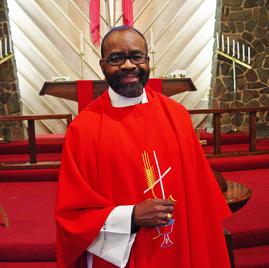
Commenting on heroes, Winston Churchill said, “Never in the field of human conflict was so much owed by so many to so few.” Presidents’ Day is the day that we set aside to celebrate the few who have made our nation great. When I was a child, we used to celebrate George Washington’s birthday; however, Washington’s birthday has given way to Presidents’ Day.
I detest Presidents’ Day. Why? Because not all our presidents are heroes. Frankly, some are not worthy of our admiration and emulation. I should say, however, that after reading the biographies of all the presidents in the 19th century, from Thomas Jefferson to William McKinley, I have softened a bit. Before entering the presidency, every aspirant to that office was outstanding in his personal life. I have to concede that even the vile racist Andrew Johnson was a self-made man who did so through self study, teaching himself the finer points of rhetoric and garnering a vast knowledge of classical literature. Having to succeed Lincoln, his presidency was doomed from the start. In the shadow of the martyred Lincoln, nobody would have been taken seriously; therefore, I have to cut Johnson some slack. Nevertheless, I wish that we would return to celebrating the birthdays of our two greatest presidents: George Washington and Abraham Lincoln.
George Washington is the most famous founding father, the legendary general who led the revolution that would eventually change the world. But, before he would garner the qualities for which we admire him, he had to be changed, transformed. Before he was George Washington, the hero, he was George Washington, the grasping, land-hungry swindler. He was a self-conscious, insecure military officer who blamed others for his blunders. In the backdrop of his heroic façade were struggles and failings—all the emotional stuff that make us all flawed humans. However, Washington grew. He was transformed and became the man that he was destined to be. Indeed that is the real stuff of heroes: people who overcome personal obstacles to actualize the callings on their souls. Each of us must confess that the biggest obstacle to our growth is ourselves. Washington humbly admitted this fact and was thereby transformed. If we could shed George Washington of the patriotic mythology and see him for what he struggled to become, then maybe Americans will demand that his birthday be restored to its rightful place as a national holiday, for then he will have become more relatable. Until then, he will remain a distant Father of the Nation, respected largely for the lore that he could never tell a lie.
Like Washington, each of us has to struggle with aspects of ourselves that we would rather not reveal to others. God is working with us in those vulnerable places. It is for this reason that Jesus demands that his followers not judge others. We do not know the full context of another person’s life to judge him or her. It is for this reason that Jesus taught his disciples that the church is not a holy club of perfect people. There are the good, the bad, the ugly and the beautiful in churches—the weeds among the wheat. In an attempt to the tear out the weeds, in an attempt to create a perfect church, people get hurt.
In 16th century Reformation history, Carlstadt, Martin Luther’s contemporary and colleague, tried to purify the Wittenberg community of its Catholic traditions when Luther was away from the city. He threw out the candles, vestments, and the altar. He tossed out everything associated with Catholicism. In the process, his fanaticism for a perfect church hurt people and trounced on their cherished traditions. He did not give people room to experience their own epiphany. He made his own epiphany the all defining one.
All that we are supposed to do as a church is to offer the Word and Sacraments to people and let God do the rest. Souls belong to God, not the church. God will do with those souls whatever God wants. Jesus teaches that God will separate the wheat from the tares at the end of time. This is solely God’s business. In the meantime, the church offers the healing balm of the Word and Sacraments as the media through which people get renewed and enlightened. We dare not get in the way of Epiphany, namely the ongoing process of enlightenment, where people are transformed from sinners to saints. That enlightenment looks complex and diverse. Judgment is not the proper stance before such complexity and diversity; rather, it is praise and admiration. We praise and admire how God enlightens both the brilliant C.S. Lewis and the shoe salesman in the garment district of Los Angeles. How God does this remains a mystery that prompts a doxological response.
George Washington had an epiphany that altered his life. The product of his epiphany: he lost his fear of man. Because of his experience of the love of God, he lost all fear. He thereby became the hero that we admire. But, he had to experience a life-altering epiphany. Epiphany—enlightenment—is always a possibility for us as well. Let us not get in the way of it for ourselves and others. There is no template for epiphany. Yet, all epiphanies seem to have in common more peace, love and joy grounded in an ability to let go and let God.
The ability to let go and let God is the contemplative move that garners space wherein life-changing epiphanies happen.
Pastor's Page for January 2014
Massud Farzan relates the story of a fox who long ago lived in the deep forest. The fox had lost both its front legs. No one knew how it happened. Perhaps a trap? A man who lived on the edge of the forest, seeing the fox from time to time, wondered how the fox got its food and managed to survive. One day when the fox was not far from him, he hid himself quickly because a tiger was approaching. The tiger had fresh game in its mouth. Lying down on the ground, it ate its fill. The tiger left the rest for the fox.
Again the next day, food providentially came to the fox by that same tiger. The man began to think: “If this fox is taken care of in such a mysterious way, its food seeming to come from God, why don’t I just rest in a corner and have my daily meal provided for me?”
Because the man had a lot of faith, he let the days pass, waiting for food. Nothing happened. He lost weight and strength over a period of months until he was a skeleton. Close to losing consciousness, he heard a Voice saying to him, “O you who have mistaken the way. See the truth! You should have followed the example of the that tiger instead of imitating the disabled fox.”
When do you follow the example of the tiger instead of the disabled fox? I had a friend who was convinced that God would provide him with a job for which he had prepared himself and desperately needed. Like the man in the story, he had great faith. My friend prayed; he fasted; he read his Bible; he retained positive thoughts; he tithed; he did all the things that would have been pleasing to God. He was convinced that God would provide him with his dream, teaching job. When it had not happened after three years, he reassured his friends and family, “God’s timing is not ours.” After five years of not getting that coveted teaching job, my friend said in deep resignation: “We believe things about God that God never said about himself.” Profound thought.
What is it exactly that we should believe about God? Relative to God, what is the proper object of our faith? There is a highly offensive commercial on the radio that is so misleading. The author of the commercial purports to be a former pastor who has made millions in the stock market. He says that there is a “money code” in the Bible that, if followed, will land one financial success. Another wolf in sheep’s clothing who claims to have found a magical formula in the Bible that will give you your heart’s desire. If such a money code existed, why didn’t Jesus and his followers use it instead of relying on contributions from women?
Let us be clear about the object of faith. It is not a financially comfortable life. You can achieve that yourself through a modicum of discipline. There are people who do not care a whit about God who are very well off. They never resorted to a magical “money code.” The object of faith is not a happy, contended life. Pleasant circumstances can give you that. Faith gives you what no human can give you. The object of faith is God. It is to be unified with God, made one with God through the waters of Baptism and sustained by the Eucharist. Faith looks to those sacraments as the place where God is continuously met. If being one with God so fills you that you find the wherewithal to spend money better and thereby prosper, good for you. Being one with God does change you. But, not in some formulaic way that one can bottle and sell to the naïve, separating them from their money.
In 2014, let us seek nothing from God, but God. Let us appreciate the beauty of God in Christ Jesus, a God who lives in us and lives for us. When we worship God, we make God an end, thereby appreciating God’s gracious beauty in which we are empowered by the Holy Spirit to share. This God is a fountain of peace, love and joy.
A wise man once said, “The happiest people are they who realize when enough is enough.” Such people are able to stop all the fuss and just rest in the moment, rest in God in your every moment. It is when you are at rest that you have eyes to see and ears to hear. Then you will know how to imitate the powerful tiger, to use your power to bless yourself and others in 2014.
Pastor's Page for December 2013
A wise person once said, “If our greatest need had been information, then God would have sent us a teacher. If our greatest need had been technology, then God would have sent us a scientist. If our greatest need had been money, then God would have sent us an economist. If our greatest need had been pleasure, then God would have sent us an entertainer.
But, our greatest need was forgiveness; so, God sent us a savior.”
The words of the angel Gabriel to Joseph concerning the Christ Child come to mind, “His name will be Jesus, for he will save his people from their sins.” That is the message of Christmas. And, that is a message for all people.
I have a friend who has gotten on a kick of referring to Jesus as Yeshua. He no longer refers to our Lord by his Greek name (Jesus), but his Hebrew name (Yeshua). He is convinced that everybody in Jesus’ day referred to him as Yeshua. He thinks that the name Jesus is the product of Greek imperialism and hatred toward Jewish people. The reality is that Jesus lived in a bilingual world, actually a multilingual one. In Jesus’ Palestine, Hebrew would have been used as a liturgical language in the context of worship. Aramaic would have been the everyday language and most folks would have had some facility in Greek and Latin. Jesus would have been comfortable with both his Greek name as well as his Hebrew one. Indeed one can refer to Jesus as Yeshua or “Joshua,” which is what both the Greek Jesus and the Hebrew Yeshua mean. The point is that Jesus is a savior for all people, for the Jew and the Greek, the Roman and the German, the African and the Persian. Indeed wherever the Gospel has gone into the world, people have transliterated Jesus’ name into their languages, tweaking it for their linguistic comfort. All this expresses the universality of the Gospel: Jesus is the Father’s gift of forgiveness of sins for all humanity. “He will save his people from their sins.”
Forgiveness is our greatest need. We tend to make other things our greatest need: finances, love, communication or professional enrichment. Those things are important in the pantheon of being human; there is, however, a hierarchy of needs, and forgiveness is at the top. And, if anything other than forgiveness becomes our greatest need that God addresses, then that changes the nature of theology, the church, and the nature of worship. More importantly, the need for forgiveness is a need that all humans share despite their varied circumstances, and that need has eternal ramifications, for through forgiveness we are brought into a loving relationship with God.
Today, we hear sermons about time management or some other modern and postmodern quandary perceived to be our most felt need. God the Father, however, knows best. God knows what trips us up in life, namely sin. It would be the height of absurdity for God to deal with anything other than sin, death and the devil, spiritual realities over which we have no power. Being incompetent in your career will not damn you. The mismanagement of time and money will not damn you. That being the case, the ultimate purpose of worship, then, is the context wherein to meet your savior from sin, death and the devil in Word and Sacrament. Worship is not free therapy. It is not a session on life enhancement. It is place where Jesus meets you to heal, forgive and empower you through the Holy Spirit in God’s chosen media of Word and Sacrament.
We are entering the season of worship with Advent and Christmas. Once again, we shall sing with the angels, Gloria Deo in Excelsis, “Glory to God in the highest.” Indeed glory to God in the highest, for God has done the unfathomable: God has become one of us. In the Christ Child we have a savior who has accomplished wonderful things for us. “For unto us is born this day in the city of David a savior, who is Christ the king.”